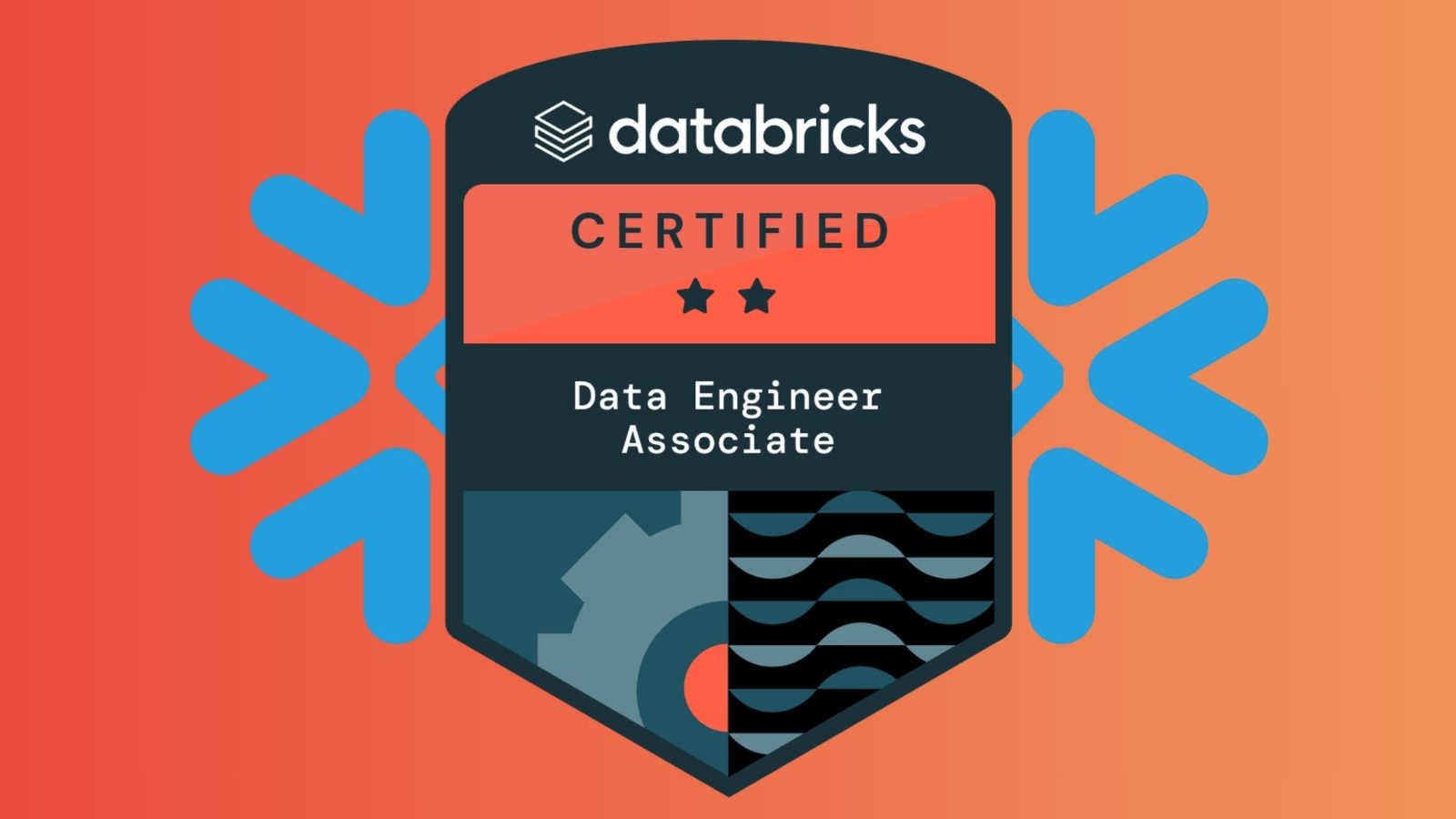
In this blog, I want to have a look at my experience towards my newest certificate: Databricks Data Engineer Associate. I’ll cover why I pursued the certificate, how I prepared, and my thoughts on the resources and the exam itself.
DataBricks Certified Data Engineer Associate Exam
Why Databricks?
For the past two and a half years, I have been working with Snowflake as my primary data platform. With Databricks offering both similarities and differences, I was curious to dive into it and broaden my knowledge.
I am certainly not the first to compare the two. I found a great comparison in Graphable’s blog (Databricks vs Snowflake Wars: 7 Critical Differences). It highlights Snowflake’s origin in cloud data warehousing versus Databricks’ roots in data engineering and data science and it also states how they are growing towards each other with growing competitiveness.
This difference in origin is what interests me most. Since Databricks is typically more technical, it also has a higher learning curve than Snowflake. But with the right experience this does give more in-depth control. My combined background in Python and data engineering gives me that technical experience, which allowed me to really enjoy that learning experience towards the certificate.
Study resources
Before I started preparing, we (Digital Hive) became a Databricks Partner. One of the benefits of that is the Databricks Partner Academy. A platform where they offer many courses and learning paths. In preparation of different certificates, they offer role-based learning paths. In my case this is obviously the Data Engineering Path.
This path aligns closely with the exam topics, with the first half focusing on the Associate exam and the second half focusing on the Professional exam. A combination of video lessons and slides creates a good balance between theoretical content and a practical approach in demo videos where they are showing the topics discussed in a lab environment.
For the theory, I believe it covers everything you need to know to prepare for the exam. However, for some hands-on experience I felt like it is lacking. The demo videos, while having a more practical approach, had more focus on SQL. As Databricks is often associated with Spark and therefore PySpark, it is no surprise that the exam questions are more focused on Python.
One drawback I would like to mention is that the lab environment used in the videos is not available to practice with yourself. This would have been a valuable addition. You can still set up your own trial account and practice the topics on your own, but that would take a lot more time. Another alternative is instructor-led courses where I believe the lab environment is included. These are also available in the Partner Academy.
Besides the study material, I was also looking for a way to test my knowledge before taking the exam. This search led me to LeetQuiz, definitely one to remember! They offer free practice questions for many certificates. Besides Databricks they also offer questions and practice exams for AWS, Google Cloud and Microsoft Azure certifications. With a mix of real exam questions, exam-like questions and AI-generated questions, they have more than enough to test yourself. For my certificate for example, they (currently) have 943 questions available. Note: the AI-generated questions felt a bit off at times but overall, it was a very useful resource.
The exam
After studying with the mentioned resources, I planned my exam and got started. I have to admit my focus while preparing was mostly on theoretical content, since I did not create a trial account. This meant that, even though the practice exams went fine, I was a bit nervous to start the exam with minimal actual Databricks expertise.
In the end, this confirmed once again that learning new topics and broadening your horizons makes you more agile. I passed my exam by combining the theory I studied with my knowledge of general data engineering best practices I have learned throughout the years.
Looking back, I’m glad I took the leap. The certificate not only gave me more confidence in Databricks but also made me more versatile as a data engineer. If you’re already comfortable in one data platform and want to broaden your horizons, I can highly recommend the Databricks Associate exam.